

Pigeon Control
Feral pigeons are actually domesticated rock doves that have returned to wild or semi-wild conditions. Often referred to as 'rats with wings', feral pigeons have become just as much of a problem in towns and cities as rats are.
Pigeons have been known to carry diseases such as Chiamdiosis, a virus similar to influenza, and Psittacosis, similar to pneumonia. Spores from the droppings can be inhaled as dust and carried on the wind. It can cause a flu like illness in healthy people, but poses more serious problems to those with low immunity.
In the course of a single year, a feral pigeon can eat its way through 64 pounds of food. With an estimated 18 million feral pigeons in Britain, this can pose a serious problem. Control is best by cage trapping; deterrent by spikes, gels or 'spiders'.
Pigeons, like all other wild birds, are protected under the Wildlife & Countryside Act 1981 and the Wildlife (Northern Ireland) Order 1985. This makes it illegal to intentionally or, in Scotland, recklessly take, injure or kill a pigeon, or to take, damage or destroy an active nest or its contents. In Northern Ireland, it is illegal to disturb birds at an active nest.
Birds are protected by law. These laws are many and complex and it is essential that those people carrying out bird management, whether pest professional or layman, understand the legal implications of what they do. If you are ever in any doubt as to the legality of any action you are about to undertake GET EXPERT ADVICE FIRST. If you don't, you could bring yourself or your organization into disrepute and face prosecution.
General licence
It is essential that anyone intending to take action against birds under any general licence first obtains a copy and familiarises themselves with the conditions. Offences committed under this legislation attract a maximum fine of £5000 or six months custodial sentence.
The Species list detailing which birds the general licence applies to may vary in N Ireland, Wales and Scotland. Check before taking action
Details within the licence may change at any time. It is recommended that reference is always made to the licence details current at the time of action.
The pigeon is currently listed on public health and safety general licences, so can be culled in accordance with the licence requirements. Management measures can include trapping, shooting (excluding weapons with a muzzle diameter greater than 1.25 inches) and nest destruction. The use of a Larsen Trap is also allowed, under strict understanding that trapped birds are supplied with adequate water, food, shelter and a suitable perch. The trap must be visited at least every 24 hours and all trapped animals or birds must be removed. When the trap is not in use it must be rendered incapable of trapping and the decoy bird removed. Culling can only be resorted to if specific conditions are met, and only where legal, non-lethal methods of control are ineffective or impractical. General licences are only issued for the following specific reasons:
- where the pigeons are causing serious damage to agricultural crops, livestock, foodstuffs for livestock, growing timber, fisheries or inland waters
- where public health or public safety is under threat
- to prevent the spread of disease
Food is the most important factor determining the size of a pigeon population and the best long term solution is to restrict food availability. It is essential that food spillages are efficiently cleared and public feeding of the birds must be discouraged.
If you need to catch and dispatch particular problem pigeons then the use of a Live Capture Cage Trap is the most humane method.
How to catch pigeons in a live catch trap:
- Feed the problem pigeons onto a specific area each day for a few days.
- Grain or bread are good baits to feed.
- Place the Live Capture Cage Trap at the centre of feeding activity and feed in the cage with a little scattered around the outside.
- Ensure the trap is level and sitting firmly on the ground. Birds will not enter an unstable trap.
- You will not catch all the birds at the first attempt and may have to continue the trapping exercise for several days.
- It is important to check the trap at least twice per day, release any non-target birds and dispatch any target birds.
- You should provide the captured birds with fresh water to drink, food and shelter especially in warm weather
- Obviously the birds will have to be humanely dispatched. A sharp tap on the head with a blunt instrument will effect a swift and humane kill.
The Feral Pigeon is widespread throughout Britain and is associated with towns and cities.
Description:
- Common city dwelling bird.
- Frequently showing dark bars across its wing plumage, they can have a wide range of colour mixes from greys, browns, white and piebald.
- Larger than a collared dove but smaller than a woodpigeon.
- Length of about 30-34cm and a wingspan of about 60-70cm.
- Weight of about 230-370g.
Life cycle:
- Breeds from March through to September, or earlier and later in mild weather.
- Nest made of twigs and built on any suitable ledge on or in buildings.
- Has 2-3 clutches per year.
- Usually lays 2 eggs per clutch
- Incubation period of 17-19 days.
- Young are independent at 30-37 days.
- Can start to breed at six months and live up to four years in the wild
Associated with towns and cities where feral pigeons spend most of their time feeding, roosting and breeding.
They build their nests in sheltered, protected sites on buildings and other structures. Nests are often found under bridges, eves or in derelict buildings. The lofts of houses and commercial buildings where birds have gained access via gaps in the roof are also common breeding sites.
Both sexes take part in nest building. Nests are usually flimsy, crude structures built from a variety of materials, such as twigs, grass, feathers, plastic, wires etc. Nests are used for successive broods and can become thick with droppings.
The exclusion of birds from areas (ie proofing) is allowed unless the bird is a protected bird with young, a nest or partially built nest, and when the proofing would prevent the birds gaining access to their nesting site. However, a person shall be guilty of an offence liable to special penalty if they "set in position...an article which is of such a nature and is so placed as to be calculated to cause bodily injury to any wild bird coming into contact therewith." In addition, "any electrical device for killing, stunning or frightening" and "bird lime or substance of a like nature to bird lime" are specifically prohibited. Crows can be quite fearless once they overcome any initial wariness, but the following could be effective:
- Netting to exclude birds from accessing specific areas and roosting ledges.
- Spikes to discourage birds from settling on specific ledges.
- Daddi Long Legs again to discourage birds from settling to roost
In a DIY situation, bird spikes and daddi long legs are the most appropriate method of preventing access to window ledges, gutters and other potential perches. These spikes are easy to cut to size and even easier to glue to the surface to be protected.
Netting requires professional input.
Visual and audio scaring does not seem to be a realistic solution with pigeon infestations. They appear to habituate to new objects or sounds in their environment quickly.
Featured Products & Best Sellers
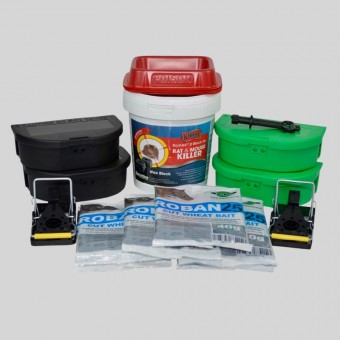
Mouse Control Kits - Difenacoum
£20.16
In Stock
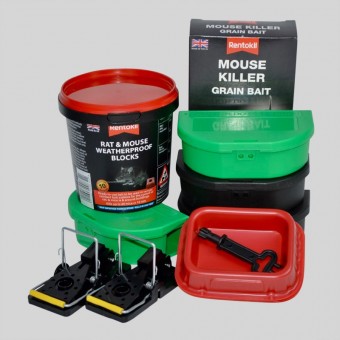
Mouse Control Kits - Brodifacoum
£21.06
In Stock
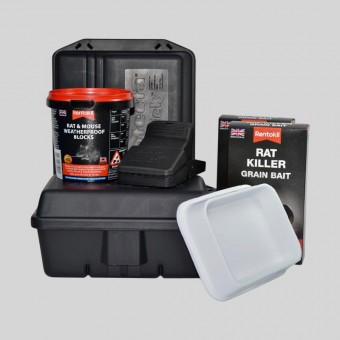
Rat Control Kits - Brodifacoum
£40.98
In Stock
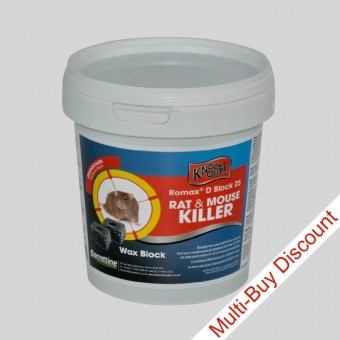
Romax D Block Rat and Mouse Killer
£6.78
In Stock
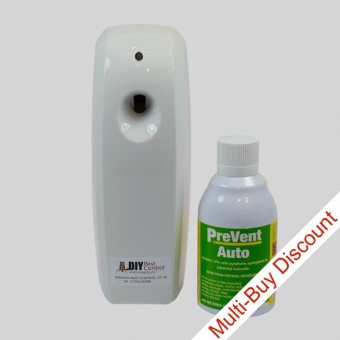
Prevent Auto Dispenser & Insecticidal Aerosol 250ml
£36.24
In Stock
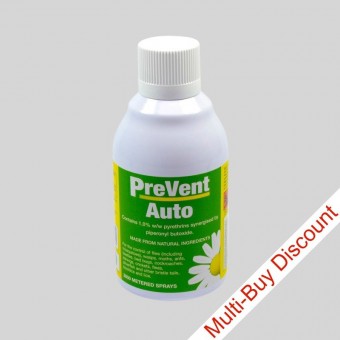
Prevent Auto Insecticidal Aerosol 250ml
£7.68
In Stock

Insecto Smokebombs 3.5g, 15g, 31g
£11.64
In Stock

£5.46
In Stock
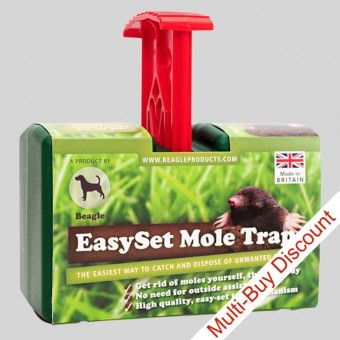
£22.02
In Stock
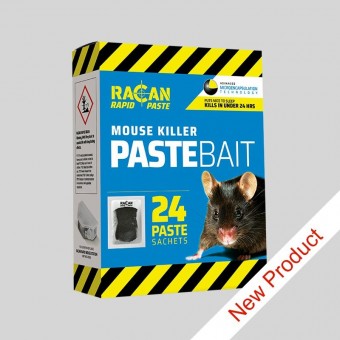
£14.58
In Stock
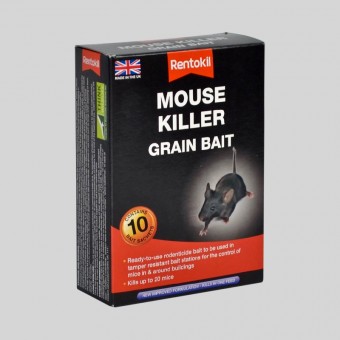
Rentokil Mouse Killer Grain Bait 100g
£5.64
In Stock
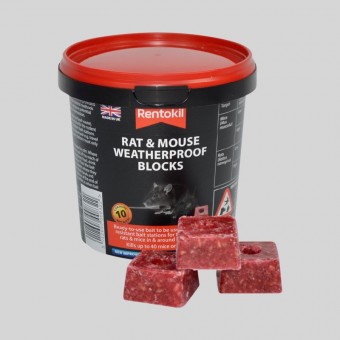
Rentokil Rat & Mouse Weatherproof Blocks 200g
£7.50
In Stock
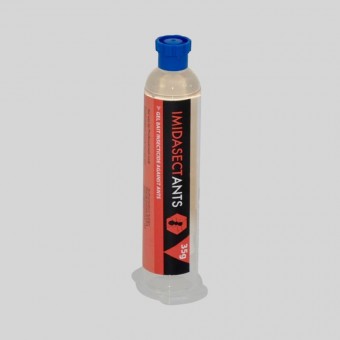
£23.46
In Stock
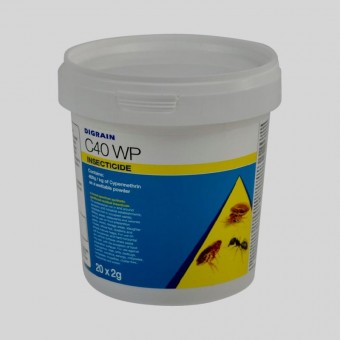
£31.98
In Stock
£19.08
In Stock

Knockout Rat & Mouse Killer Pasta 150g
£9.06
In Stock
£44.10
In Stock
£27.60
In Stock
£12.24
In Stock

DIY Pest Control Ltd, Pontefract Street, Osmaston Park Industrial Estate, Derby. DE24 8JD.
© DIY Pest Control Ltd 2019 | Registered in England: Company Reg. No 5991770